









Dr. Jasmeet Singh Ahluwalia

265, Lajpat Nagar, Guru Nanak Mission Chownk, Jalandhar, Punjab 144001

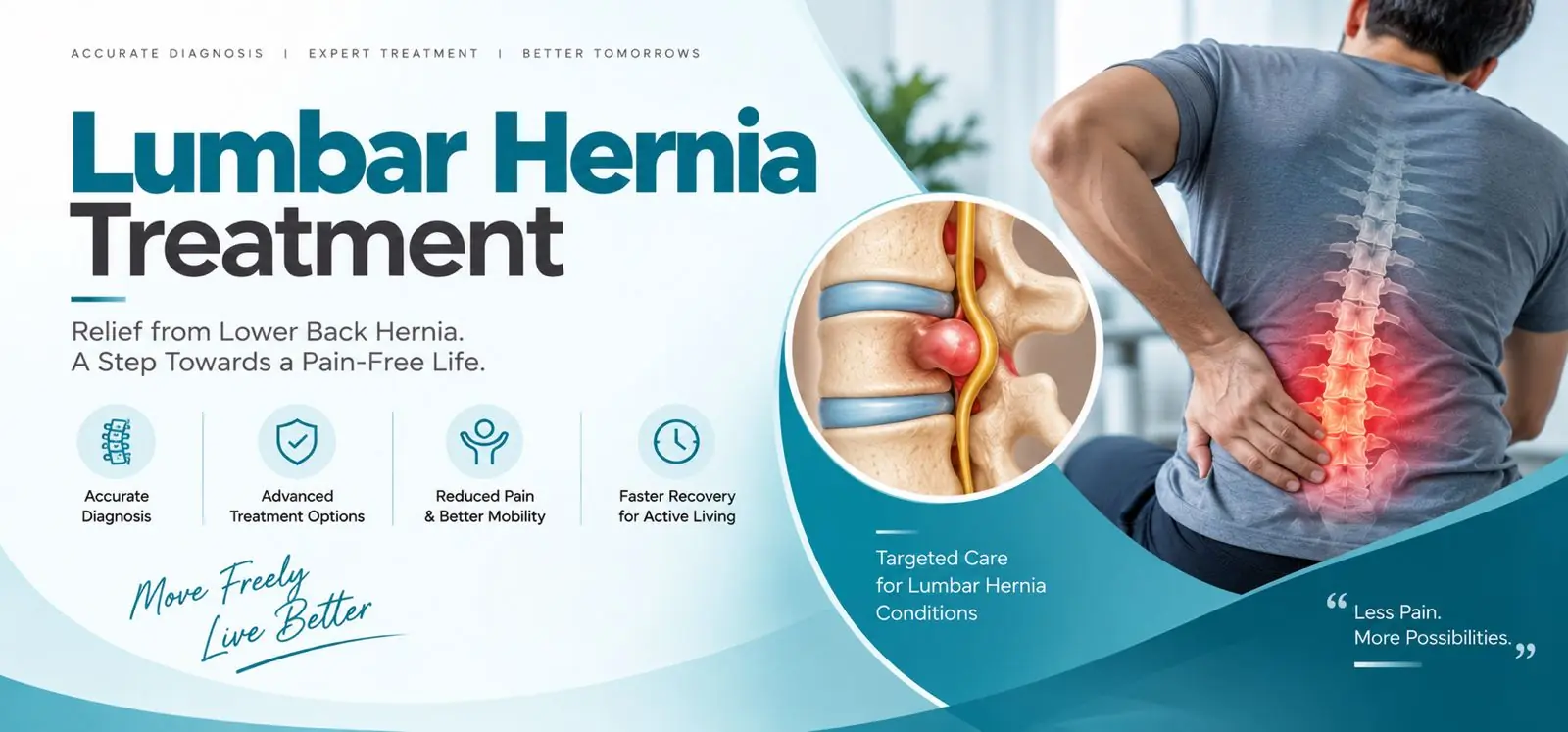
Lumbar Hernia Treatment in Jalandhar

All Insurance Covered

( Cashless / Reimbursement )

Lumbar Hernia Treatment in Jalandhar

Lumbar hernia is a kind of hernia which is rare and can develop in a weak area of muscles and tissues in the back or abdomen. It can manifest itself as a swelling around the lower back or along the side of the belly and may give pain, particularly during coughing, lifting, bending and straining. The patients can get a detailed clinical assessment at Star Hospital, Jalandhar to know where, how much and why the hernia is formed. Dr. Jasmeet Singh Ahluwalia will assess the patient for possible lumbar hernia and discuss the treatment options. If an operation is required, the surgeon’s goal is to strengthen the area and decrease the chance of a hernia coming back.

Benefits of an Ayushman Bharat Hospital

Cashless Treatment

Patients do not need to pay out of pocket for listed surgeries, drugs, diagnostics, room charges, or ICU fees.

Pre and Post-Hospitalization

Expenses incurred 15 days before admission and up to 15 days after discharge.

PAN India Validity

You can use the Ayushman card at any empanelled hospital across the country, not just in your home state.

What is Lumbar Hernia?

A lumbar hernia occurs when fatty tissue, part of the intestine, or another internal structure pushes through a weakened area in the muscles or connective tissues of the lumbar region. Lumbar hernias occur on the back or side of the abdomen, as opposed to the more familiar hernias. Depending on the patient, a small painless swelling or pain, pressure or discomfort may be felt.

Where does it occur?

Lumbar hernias are usually found in the following places:
  • There are two lumbar triangles, one superior (also known as the Grynfeltt-Lesshaft triangle) higher up in the back near the twelfth rib and one inferior (also known as the Petit triangle) lower down, closer to the hip bone.
  • Some areas weakened by previous surgical incisions in the lower back.
  • Any site that has been impacted by trauma or injury to the back muscles
  • Regions where muscle layers are naturally thin or underdeveloped such as some people are born with.

Types of Lumbar Hernia?

The types of Lumbar Hernia are as Follows:
  • Congenital lumbar hernia: These are present from birth. It occurs when the layers of muscle that form the back in the lumbar region fail to develop completely during the fetal stage of life, creating a natural opening or weakness from the beginning. The congenital lumbar hernia is extremely rare and may be detected in infancy or childhood, but in some cases may not be noticed until adulthood when the defect is small.
  • Acquired lumbar hernia: This is the most common type and occurs at later life. It can be further divided into:
  1. Primary acquired lumbar hernia — occurs when the abdominal-wall muscles/fascia are weak, but there is no previous operation or significant injury.
  2. Secondary acquired lumbar hernia — occurs as a result of an injury of the abdominal wall, e.g., surgery, trauma, infection.
  • Postoperative lumbar/flank hernia: This is a type of secondary acquired hernia that develop after surgery in the flank/abdominal region, kidney, spine or related areas.

What Causes a Lumbar Hernia?

A lumbar hernia forms when tissue, fat, and sometimes even a part of the intestine protrude through a weak point in the muscles of the lower back or side (flank) of the body. This is a defect that may be derived from several different sources:
  • Congenital weakness – The muscle layer in the lumbar area may be naturally thinner in some individuals than others, and thus be more susceptible to hernias even with normal activity.
  • Trauma or injury – A severe direct impact to the back, a fall or even a deep surgical wound in the back can make the muscle wall vulnerable and cause a hernia to develop.
  • Previous surgery – Any surgery in the lower back or flank, such as nephrectomy (the removal of a kidney), or spinal surgery, may leave scar tissue that is not as strong as the original muscle, and this opening may develop over time.
  • Repeated strain – Constant pressure from lifting heavy objects, chronic coughing, obesity, or straining for a long period of time (such as straining to defecate) weakens areas of the abdominal and back wall over time, leading to the formation of a hernia.
  • Age-related muscle weakening – With age, muscles lose tone and elasticity, making it more likely for a hernia to form in this area.

Symptoms

Common Symptoms of Lumbar Hernia are as follows:
  • A bulge that is soft, visible, and occurs on the side or back of the lower body that is worse when standing, coughing, or straining, and may decrease when lying down.
  • A low back or flank pain that is dull or is associated with heaviness, and gets worse with exercise.
  • Occasional pain, not severe, that can be confused with a muscle strain or back pain.
  • If the hernia is more advanced, the pain will be sharp, nausea or vomiting can occur, and the hernia needs medical attention immediately.
If a person sees any type of bulge along with back pain, then he or she should have it checked out instead of taking it for granted that it’s a pulled muscle.

Types of Surgical Approaches

The type of surgery needed will depend on the size of the hernia, the overall health of the patient, and the surgeon’s judgment.
  • Open Repair: This is the traditional technique, in which the surgeon will make an incision on top of the hernia, push the protruding tissue back into place, and strengthen the weakened muscle wall with a mesh for extra support. It is a good choice to be used for larger or more complex hernias.
  • Laparoscopic Repair: In laparoscopic repair, a few small cuts and a camera are used to repair the hernia from within. This generally means less pain after surgery, reduced scarring, and quicker recovery from surgery as compared to open surgery.
  • Robotic Repair: This minimally invasive method is taken one step further with the use of a robot, which provides the surgeon with even more precision and control, especially when dealing with a hernia in a difficult-to-reach area or a patient who has had surgery in the area. It combines the benefits of small incisions with enhanced surgical accuracy.
Dr. Jasmeet Singh Ahluwalia takes into account the patient’s health history, type of surgery, and desired outcomes to decide the right method at Star Hospital.

Recovery After Lumbar Hernia Surgery

Recovery timelines vary depending on which surgical technique is used, but here’s what patients can generally expect:
  • With open repair, the recovery process tends to be longer and most patients will be able to get back to regular activities in 4 to 6 weeks, avoiding heavy lifting activities during recovery.
  • Laparoscopic and robotic repairs generally result in a quicker bounce back, with many patients being able to return to light activities within 1-2 weeks, but avoid strenuous activities for a couple of weeks after that.
  • Mild soreness, swelling, or bruising near the surgical site is normal in the first few days and settles gradually.
  • Regular follow-up visits help track healing and catch any complications early.

Lumbar Hernia Surgery in Jalandhar

Star Hospital is the top choice for Lumbar hernia surgery in Jalandhar. One of the reasons why Dr. Jasmeet Singh Ahluwalia at Star Hospital is considered a trusted name in Jalandhar for Lumbar hernia surgery is the use of modern and minimally invasive surgical techniques throughout. From the initial detailed consultation and diagnosis provided after an MRI, to his clear, easy-to-understand explanations about what is happening with the patient, the surgical procedure and why surgery might be the best way to move forward when conservative treatment has not provided relief, his approach is personalized and uses modern, minimally invasive surgical techniques. When you search for reliable surgery for a lumbar hernia, it isn’t just about the surgery, it’s about regaining your quality of life, being able to walk without pain, sit comfortably, sleep through the night and return to work or family again with confidence.
WhatsApp chat