






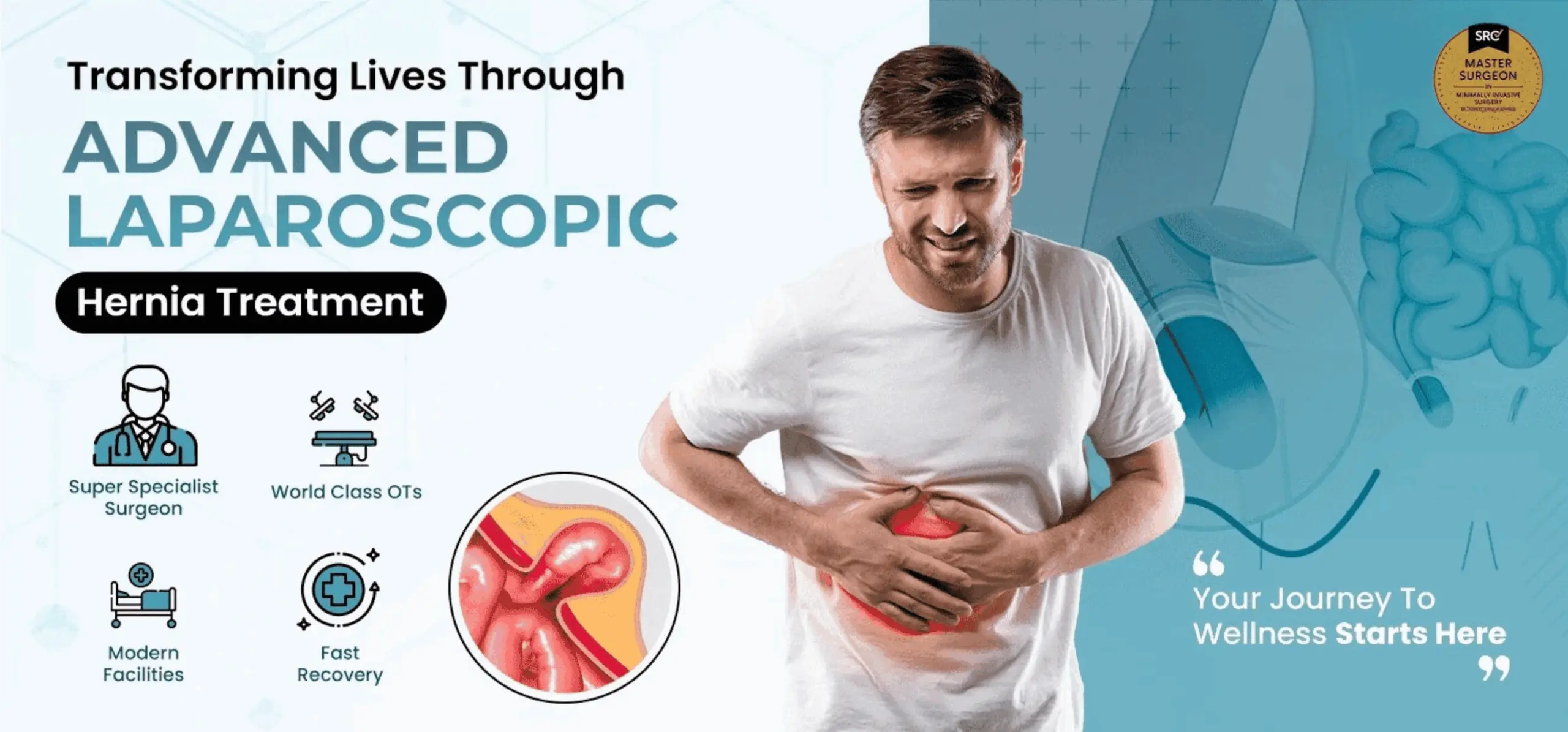
This involves very small cuts away from the hernia. Whole of the inside the abdomen can be seen by introducing a small camera scope from this hole. A hernia is closed and a special mesh is kept from inside. This leads to more secure closure of hernia as it is like repairing a tire puncture from inside. A larger mesh can be placed by this method. All hernias can be visualized easily and repaired simultaneously. There is no need for a pipe to drain fluid after surgery. The scar is much smaller. Chances of getting a hernia back are much less as compared to open hernia.
Call +91 98889-58889 For An Enquiry.
Raise Your Expectations Set a benchmark of high standards. every experience meets the highest benchmarks of quality and satisfaction
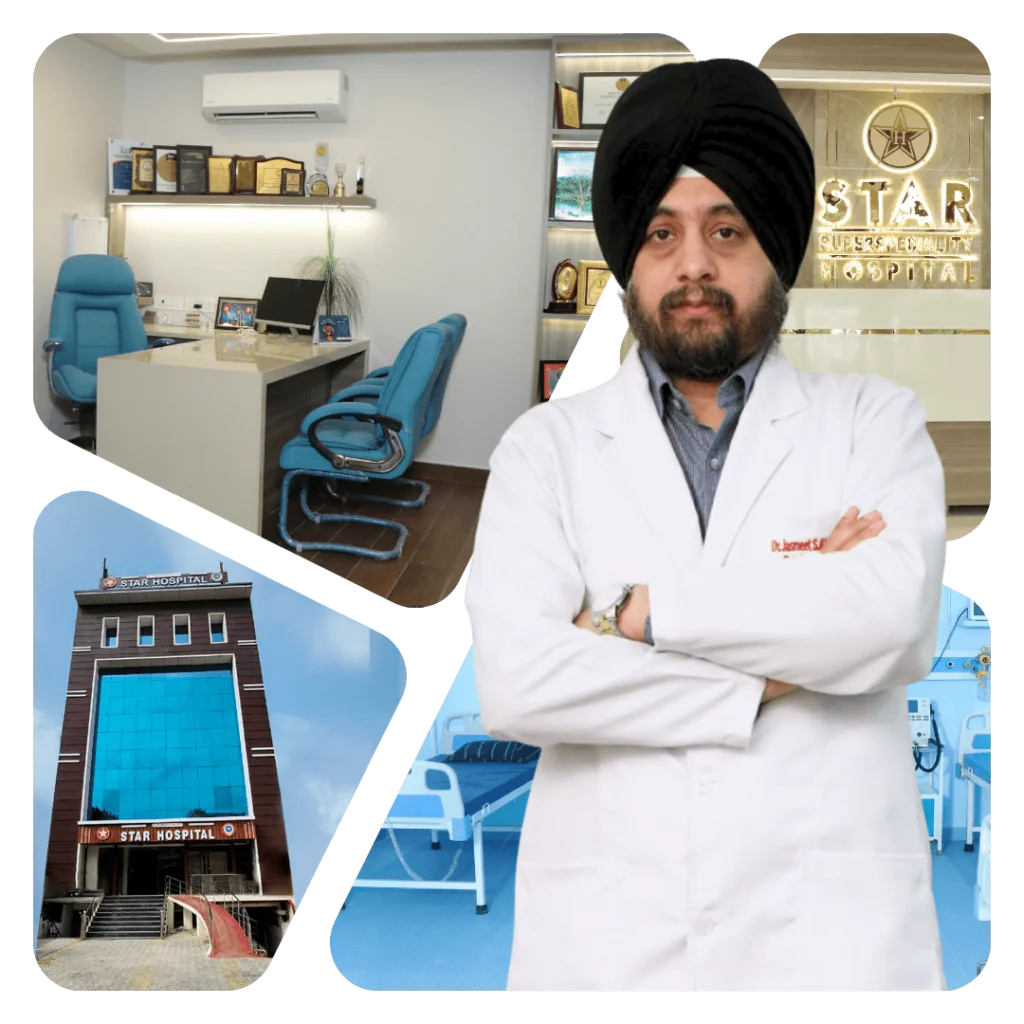
Our hospital has advanced technology gadgets and the best equipment in every field and modern technology paves the way to a smarter tomorrow
Our Dedicated And Committed hospital Team, Highly Experienced In Surgical Field Will Conduct Treatments Precisely According To Your Proper Needs.

Inguinal Hernias
The most common type of hernia is when the intestines or fat tissue pass through a weak area in the groin muscles. It’s more likely to happen in men.
Incisional & Ventral Hernias
A ventral hernia forms when the abdominal wall is weak in some place, while an incisional hernia forms where the muscles are weak in the area of a previous surgical incision.
Diaphragmatic Hernias
This is the case when organs in the abdomen migrate through an opening or weakness in the diaphragm, the muscle separating the chest from the abdominal cavity.
Hiatus Hernia
A hiatal hernia occurs when the top section of the stomach goes through the diaphragm into the chest, sometimes causing acid reflux or heartburn.



If you are looking for inguinal hernia surgery in Jalandhar, then Dr. Jasmeet Singh Ahluwalia is an excellent option.
In this part of the intestine, fat, etc. protrudes through a weak spot in the abdominal muscles in the inguinal region (near the junction of the belly and thigh). This results in a lump that can be felt initially, but as it becomes bigger, it can be seen as well. It may disappear or reduce in size on lying down (as during sleep) and reappear on doing work (especially after coughing or lifting heavy weights).
There is no cure for a hernia without surgery. Once detected, it’s recommended to get it operated on, as it may complicate any time into a life-threatening situation.
Inguinal hernias can be seen in new-borns and children due to weakness in the abdominal wall that’s present at birth especially in males. Testicles develop in abdomen and later descend into the scrotum which leads to weakness in this area. Sometimes hernia is visible only when child is crying, coughing or straining.
If you know you have a hernia and you experience the following:
The cause is not always apparent but may include:
A hernia is not entirely preventable but certain modifications may decrease your chances of getting one.
Looking for robotic Inguinal repair in Jalandhar? Then Dr Jasmeet Singh Ahluwalia is an excellent option. Robotic inguinal hernia repair is an advanced technique that helps treat an inguinal hernia with a minimal incision. An inguinal hernia is a weakness in the abdominal wall, and tissue pushes through this weak spot, usually creating a bulge, discomfort, or pain in the groin. If a hernia is interfering with daily living or getting worse, surgery can be recommended. Dr Jasmeet Singh Ahluwalia, a robotic inguinal hernia repair surgeon in Jalandhar, offers top-notch surgical treatments for patients requiring accurate, minimally invasive hernia surgery.
Robotic inguinal hernia repair is performed with the aid of high-tech robotic systems. The system offers improved visualization and facilitates controlled and precise movements during repair of the weakened abdominal wall. Generally, a minimally invasive robotic procedure will result in smaller incisions than traditional open surgery and can aid a more gradual recovery, depending on the patient’s specific case.
Dr Jasmeet Singh Ahluwalia will properly assess every patient before suggesting robotic hernia surgery. The size, location of the hernia, symptoms, prior surgical procedures, general health, and medical history are all taken into account when planning treatment. To accomplish this, the focus is on providing effective hernia repair with patient safety and comfort.
Aside from pain, swelling, or a persistent bulge, early evaluation is important if you are experiencing any pain in the groin area. A surgeon specializing in robotic inguinal hernia repair in Jalandhar can evaluate if robotic surgery is the right treatment for you and direct you to the best option available.
Usually, a hernia can be diagnosed by a doctor by just examining the patient. In cases of doubt, a scan may be required like USG or CT or MRI.
In this procedure, a cut is made in the groin area at the site of the hernia. The protruding tissue is pushed back and a mesh is kept over it to strengthen that area. The opening is then closed with stitches, staples, or surgical glue.
After the surgery, you’ll be encouraged to move about as soon as possible, but it might be several weeks before you’re able to resume normal activities.
In this minimally invasive procedure (keyhole method). There will not be any direct cut on the hernia site. Instead, there will be very small cuts elsewhere on the abdomen through which a camera and instruments will be inserted.
A much bigger mesh is employed after folding it and inserting it through a small hole. People who have laparoscopic repair might have less discomfort and scarring after surgery and a quicker return to normal activities. Having a surgeon who is very experienced in the laparoscopic procedure may reduce this risk of getting a hernia back.
Laparoscopy allows the surgeon to avoid scar tissue from an earlier hernia repair, so it might be a good choice for people whose hernias recur after open hernia surgery. It also might be a good choice for people with hernias on both sides of the body (bilateral) as both sides can be operated from the same small holes whereas in open surgery two big separate cuts will be required.
Laparoscopic surgery is also possible for small kids and helps them in recovering fast and with smaller scars.
Pain may be lesser, return to work quicker in the keyhole surgery method.
Children’s umbilical hernias often close on their own in the first two years of life. Umbilical hernias in adults are more likely to need surgery.
When the bulging abdominal tissue (intestine or fat) becomes trapped in the hernia hole, it can reduce the blood supply to the section of trapped intestine or fat and can lead to pain. If the trapped portion of the intestine is completely cut off from the blood supply (strangulated hernia), tissue death (gangrene) may occur. Infection may spread throughout the abdomen leading to a life-threatening situation.
Most umbilical hernias in babies close on their own by age 1 or 2.
The cut is made at the site of the hernia. Contents are pushed back and the hole closed with sutures. In adults, a mesh is usually placed to strengthen the abdominal wall. Open surgery involves a cut often bigger than the size of hernia to make space for the mesh. In many cases, a tube is kept to drain fluid from the wound for a few days after surgery.
Hernia Surgery Cost In Jalandhar |
|
| Types of Hernia Surgery | Details |
| 1. Laparoscopic Inguinal Hernia Cost | Rs. 35,000 |
| 2. Laparoscopic Umbilical Hernia Cost | Rs. 40,000 |
| 3. Laparoscopic Incisional Hernia Cost | Rs. 40,000 |
| 4. Hiatus Hernia Cost | Rs. 75,000 |
| 5. Open Surgery Cost | Rs. 25,000 |
Contact Info |
|
| Open | 9:00 am to 6:00 pm |
| Working Days | Monday – Saturday |
| Mobile Number | +91-9888958889 |

Unfortunately, no. With the onset of a hernia, the muscle cannot mend itself, so the “hole” will not close up. Symptoms can be mild for a time, but the hernia can start to increase in size, or it can develop complications. The only way to fix it permanently is to undergo surgery.
For many patients, laparoscopic surgery is preferred as it allows for a smaller cut and is less painful after surgery, and the recovery is faster. But not all hernias are created equal. Treatment will vary based on the type of hernia, size, general health, and the surgeon’s evaluation.
The most coomon medicine used by hernia patients is ampicillin and gentamicin. it should be given in the cases of gastroschisis and patients with large omphalocele
yes, but low fat and low-fat yogurt is good for hernia patient.
Many people have some pain or discomfort after surgery, but it is typically mild and can be treated with medication. The pain gets better daily, and many will be walking the day after. Early walking also promotes faster healing.
Each person’s recovery is unique, but most patients begin to feel a lot better after a week or two. Usually, light activities can be resumed within a few days, and full recovery may take 4-6 weeks. Rest and the doctor’s orders are important to a smooth recovery.
You should be able to go back to work in 1-2 weeks if you work at a desk. Work requiring heavy lifting or strenuous work typically has a longer recovery time. Your surgeon will let you know when it’s safe to resume your normal routine.
The success rate of herniotomy is high, but there is a possibility of a hernia recurrence. If you follow your surgeon’s recovery advice, don’t do too much too soon, maintain a healthy weight, and quit smoking, you will help lower the chances of recurrence.
In the first few days after surgery, it’s best to eat light, healthy meals that are easy to digest. Include fruits, vegetables, whole grains, and lean proteins, and drink plenty of water. Foods that are high in fiber are particularly beneficial, as they will help to stop the area from becoming constipated, which can put undue strain on the healing area. As you get better, you’ll be able to start eating your usual food little by little, unless you’re told otherwise by your doctor.
EXCELLENT Based on 213 reviews
 Posted on Google
 Angela SinghThank you doctor Mandeep Kaur. I had a Positive result after 2 weeks of my IUI I am so happy I was waiting for so long to concive and to see 2 lines on my pregnancy test but every time that was unsuccessful but this was my first try with IUI and that’s go successfully thank you so much. 😊😊Posted on Google
 Sarabjeet. BangaGreat experience with Dr. Mandeep and staff of the hospital.Posted on Google
 amit kambojMy experience is very goodPosted on Google
 SANDEEP KUMAR PURIGreat Staff With good facilitiesPosted on Google
 Baljeet KaurThank you so much Dr mandeep from the bottom of hearts for taking such good care. Because of your professionalism and great smiles, we felt like we were in good hands and that gave us peace of mind towards the big day.Posted on Google
 ManishaI got my friend’s weight loss surgery done at Star Hospital. We were impressed by Dr Ahluwalia’s clarity of thought on weight loss and Bariatric Surgery. We visited some other hospitals before and were always confused as their versions were very different but here we got answers to all our questions in a very clear way and my friend could gather courage to finally get his Bariatric Surgery done and start living a normal life again. Procedure went smooth as was told and we were out out of hospital very next day. Now we regret delaying this for years!Posted on Google
 Amrit KaurDr Mandeep is a very hardworking and nice doctor.my result came positive and I'm very thankful to mam and all the staff members 🙏🙏
